Here's a bevy of WW1 color pictures ...

Collapse
X
 
  • Time
  • Show
Clear All
new posts
  • dogtag
    Senior Member
    • Sep 2009
    • 14985

    #1

    Here's a bevy of WW1 color pictures ...

    To take your minds off the election for a while.
    Includes RMS Lusitania the sinking of which brought
    America into the final year of the war.
    And a crashed Zeppelin.

    https://www.dailymail.co.uk/news/art...centenary.html
  • Vern Humphrey
    Administrator - OFC
    • Aug 2009
    • 15875

    #2
    Very interesting. John McCrae, the author of "In Flanders Fields" was the second-in-command of the First Canadian Field Artillery Brigade, an 18-gun unit comparable to a modern American artillery battalion. He had secondary duties as Brigade Surgeon. Shortly after writing his famous poem, he was transferred to the 3rd Canadian Field Hospital (McGill). He is quoted as saying, "We don't need more damn hospitals. We need more and more fighting men!." It was from the 3rd Canadian Field Hospital that he submitted his famous poem to the London Spectator, which rejected it. He then submitted it to Punch, which printed it, but left his name off. When the poem became so popular, Punch hastened to confirm that McCrae was indeed the author.

    In late 1917, he fell sick and was sent to the 15th British Field Hospital, where he died in January 1918, of double pneumonia and meningitis. Ironically, one of the officers who treated him was Alexander Fleming, who later discovered Penicillin, which would have saved McCrae.

    He is buried in the cemetery of the 15th British Field Hospital. All Commonwealth units had cemeteries right behind their battle positions, towards the end of the war, the Commonwealth War Graves Commission was created to care for those cemeteries -- and they are quite beautiful and well-kept to this day.

    One hard-and-fast rule of the Commonwealth War Graves Commission is that no individual monuments are allowed. There can be monuments to the units and the battles they fought, but the individual soldier has only his marble cross. The exception to this rule is John McCrae, who has an impressive monument in the 15th British Field Hospital Cemetery.
    Last edited by Vern Humphrey; 11-07-2018, 07:12.

    Comment

    • togor
      Banned
      • Nov 2009
      • 17610

      #3
      I've seen some French photographs in original color, via some limited process that they had at the time. These are colorized ex-post, with literally the same shade of olive showing up everywhere. I guess there's a place for them, like a refinished '03, but nothing like a rifle in original (if worn) finish to capture the feeling of history.

      Comment

      • dogtag
        Senior Member
        • Sep 2009
        • 14985

        #4
        Originally posted by togor
        I've seen some French photographs in original color, via some limited process that they had at the time. These are colorized ex-post, with literally the same shade of olive showing up everywhere. I guess there's a place for them, like a refinished '03, but nothing like a rifle in original (if worn) finish to capture the feeling of history.
        The choice was not original color versus colorized,
        it was color versus B & W.
        I prefer color no matter what kind.

        Comment

        • togor
          Banned
          • Nov 2009
          • 17610

          #5
          I understand, DT, and there are times. We like to see old warbirds in period paint even though it can't possibly be original.

          Comment

          • Vern Humphrey
            Administrator - OFC
            • Aug 2009
            • 15875

            #6
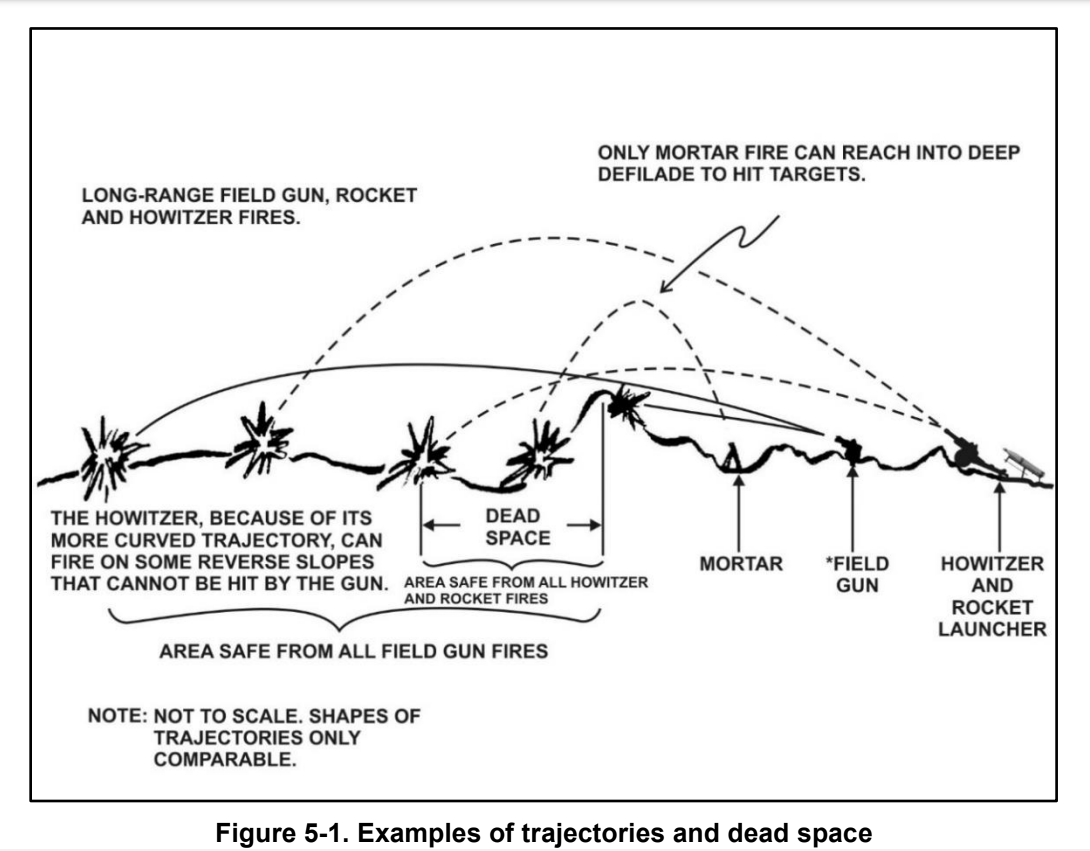
            I found the artillery pictures interesting. The French claimed to have invented Indirect Fire -- engaging targets that can't be seen from the gun position. A French instructor made that claim to a class of Americans, including an officer of the Virginia Rockbridge Artillery, who set him straight -- my first cousin, Milton Wylie Humphreys invented indirect fire during the Civil War:

            The small force under Colonel John McCausland consisted of the 36th Virginia Infantry, six companies of the 60th Virginia Infantry, a company of cavalry and four pieces of Bryan's Battery–two 3-inch rifled cannons and two 12-pounder howitzers. They averaged 15 miles per day, engaging in minor skirmishing as they neared the fort. On the morning of May 19, two miles from Fayetteville, they encountered a small force of Union cavalry. Bryan's guns opened fire and drove them into the woods. One casualty was Humphreys' favorite gun, 'Maggie,' which jumped out of its brass trunnion bands and broke a front sight.

            The Confederates arrived at a cleared plateau approximately a mile and a half in front of the fort. Humphreys gave the following account of the battle in his book, Military Operations in Fayette County, West Virginia. 'The infantry went down into the woods toward the works,' he wrote. 'The road to Raleigh (now Beckley, West Va.) after running in a straight line nearly three-fourths of a mile from Fayetteville, turns square to the left, and ascends to a small cleared plateau with a hill on the right. On this ridge were posted Bryan's third and fourth. The second piece (mine) was posted on the plateau at the end of a straight opening which had been cut in the woods and ran directly toward the Federal Fort.

            'My piece opened first and was immediately answered, and my third or fourth round cutting away the Yankee colors, they shelled us so vigorously and accurately with several guns that we were compelled to move to a place nearby where we could not be seen for the timber in front of us and the smoke behind us rising from the woods beyond the road which were on fire.'

            This was a perfect opportunity for Humphreys to try his theory of indirect fire. He knew that the fort was approximately a mile away. From experience, he knew the range of his cannon. By using trigonometry, he calculated how far he would have to elevate the muzzle of his piece to shoot over the stand of black pines in front of him and drop a shell into the vicinity of the fort. The distance from the gun to the fort formed the base of a triangle; the trajectory of the shell was the hypotenuse. Once the shell expended its momentum, it would drop to earth.

            Humphreys placed a man on a nearby hill to direct his fire, which he kept up the rest of the day and well into the following day. Under orders to fire slowly, due to a shortage of ammunition, he fired only 65 shots. The Union commander, Colonel Carr B. White, sent an armed patrol out on the 20th to locate the cannon, whereupon the Rebels prudently withdrew.

            Comment

            • Roadkingtrax
              Senior Member
              • Feb 2010
              • 7835

              #7
              Coehorn mortars pre-date the Civil War by quite a bit.
              "The first gun that was fired at Fort Sumter sounded the death-knell of slavery. They who fired it were the greatest practical abolitionists this nation has produced." ~BG D. Ullman

              Comment

              • Vern Humphrey
                Administrator - OFC
                • Aug 2009
                • 15875

                #8
                And they were used on targets that could be seen from the gun position. And only an idiot would think Coehorn mortars are field artillery.

                Comment

                • Roadkingtrax
                  Senior Member
                  • Feb 2010
                  • 7835

                  #9
                  Originally posted by Vern Humphrey
                  And they were used on targets that could be seen from the gun position. And only an idiot would think Coehorn mortars are field artillery.
                  Stop Braying!

                  Indirect fire is not restricted to artillery, nor mortars. It's an application of a projectile without relying on a direct line of sight between the weapon and the target. Like this forum.
                  Last edited by Roadkingtrax; 11-08-2018, 11:07.
                  "The first gun that was fired at Fort Sumter sounded the death-knell of slavery. They who fired it were the greatest practical abolitionists this nation has produced." ~BG D. Ullman

                  Comment

                  • togor
                    Banned
                    • Nov 2009
                    • 17610

                    #10
                    Here's the wiki page on indirect fire.


                    If Vernon can get his claim to stick with the editors then good on him. Otherwise it gets marked down as a Whopper of the Al Gore/Internet variety.

                    Comment

                    • JB White
                      Senior Member
                      • Aug 2009
                      • 13371

                      #11
                      Indirect fire was the name given for an artillery strategy. Let's please stop nitpicking the latter day semantics and appreciate the photos for what they are?

                      Yes, the colors are off and everybody knows all about that already. Including the artist who openly admits painted campaign ribbons because he couldn't make a determination by the shades available. No revelation for the most of us. Colorization showed Sinatra with green eyes.
                      I couldn't help but notice the transitions from the SMLE MkIII to the MkIII*. Including those transitional forestocks with no volley sights, but the stocks were scalloped for sights never installed. Couldn't quite tell if any were cut for the magazine cutoff plate though. All in the trenches at the same time. The differences being between the units photographed. Beautiful shades of walnut. All the same on all the rifles. Do not use that as a restoration reference!

                      The colorization brought the war a little bit closer to our time. Thanks DT. I appreciated the little trip back.

                      I remember when Lucille Ball was first filmed in color. I didn't know she had red hair until then. It never came up and I never questioned it.
                      2016 Chicago Cubs. MLB Champions!


                      **Never quite as old as the other old farts**

                      Comment

                      • dogtag
                        Senior Member
                        • Sep 2009
                        • 14985

                        #12
                        The sentry with fixed bayonet is wearing spurs ?
                        On his sling swivel is what ? sling ring ?

                        Comment

                        • Vern Humphrey
                          Administrator - OFC
                          • Aug 2009
                          • 15875

                          #13
                          Originally posted by Roadkingtrax
                          Stop Braying!

                          Indirect fire is not restricted to artillery, nor mortars. It's an application of a projectile without relying on a direct line of sight between the weapon and the target. Like this forum.
                          Jackasses bray about things and expose their ignorance. The Field Artillery School credits Humphreys with being the first man to use indirect fire in combat, and there is a plaque in his honor in Snow Hall.

                          Comment

                          • Roadkingtrax
                            Senior Member
                            • Feb 2010
                            • 7835

                            #14
                            Ignorance and arrogance in your case.

                            I didnt realize there was a plaque? Well, game, set, match. No doubt he used it, no doubt it was effective...no doubt he wasn't first.

                            "The first gun that was fired at Fort Sumter sounded the death-knell of slavery. They who fired it were the greatest practical abolitionists this nation has produced." ~BG D. Ullman

                            Comment

                            • Vern Humphrey
                              Administrator - OFC
                              • Aug 2009
                              • 15875

                              #15
                              More braying.

                              Comment

                              Working...