

 Tweet
Tweet
Amazon had a great deal in NY that would have essentially made them tax free for many years costing NY millions in unreceived taxes, or would it? Occasional Cortez is another stupid NSDP member that can't see the forest for the trees. There would have been 25,000 employees with good jobs paying millions in Federal, State, and local income taxes, sales taxes, property taxes, licenses, etc, plus adding something like $1.5 billion/year to the NY economy. Good bye NY, hello Texas or perhaps Mexico.
-
-
When slavery was legal in this country, some slaves were allowed to work on their own. But every penny a slave earned belonged to his master. Under those circumstances, it would be correct to say that allowing the slave to keep some of his earning "cost the master money." Those who say tax breaks "cost the government money" are in effect saying the government is the master and the people are the slaves.
And we should not forget that businesses don't pay taxes -- businesses COLLECT taxes. Every penny in tax that a business pays comes out of the pockets of the customers. -
Valid points, but the other side of the argument is this: a large installation increases demand for local government services, such as road maintenance, police, fire, inspections, social services, etc. If those costs go up, but Amazon is exempt from paying local taxes, then the burden falls on locals who do pay taxes but don't directly benefit from Amazon.
Somewhere along the line we bought into this idea that "wealth creators" are the few at the top and they should be as exempt from taxes as they can manage. But Bezos doesn't need the subsidy.
It's funny. When we think about M1 carbines for example, we think of people on the production line in Dayton Ohio, not GM executives. Fast forward a few decades and Amazon is Jeff Bezos, not the thousands of people who actually execute the customer orders. Somewhere along the way, we changed how we think about working people. AOC and others are forcing the country to look at this.Comment
-
This has been repeatedly debunked, and apparently needs to be debunked again. Business taxes are paid primarily by the investors and to some degree the workers, in competitive market situations. That is, your tax bill doesn't allow you to just raise prices arbitrarily in the market without losing market share, or cut your workers pay, if there is a competitive labor market.
Two prime examples of business taxes recently in the news: The Trump Tariffs are business taxes, and businesses in competitive markets are struggling to absorb them without losing market share. Also the Trump Corporate Tax Cuts were basically a negative tax, and those proceeds did not go to price reductions, but rather to investors (stock buybacks) and employee bonuses. It's too bad Vernon doesn't want to read and absorb this because he would learn something new, and learning new things is a sign that intellectually, one is still open for business. I don't care what a person's age is, that should be a goal.Last edited by togor; 02-18-2019, 08:03.Comment
-
{ a large installation increases demand for local government services, such as road maintenance, police, fire, inspections, social services, etc. If those costs go up, but Amazon is exempt from paying local taxes, then the burden falls on locals who do pay taxes but don't directly benefit from Amazon. }
Well Togar that is an important observation ... here in my little town one of our most costly commodities is water. Just good ol plain potable water.
Our "potable " water comes to us from it's flow from the big lake Okechobee and the glades . Our water bill for two often exceeds our electric bill that we use to run stove, water heater and central AC.
We've just been informed that our water rates will be increasing. Seems there are going to be some infrastructure costs do to the need to supply water to the new hotels and water park about to be built.
Personally I'm in no need for a new hotel... or even a water park. So I'm thinking that perhaps the stock holders of said hotels and water park should be footing the bill for the necessary water supply.
Same old arguement ... they'll be supplying jobs . Good thing too... some one will have to pay their water billComment
-
Vern, you are driving the Stooges to distraction!Comment
-
They're doing it to themselves. They fail to understand simple facts:
Money is not real until it is EARNED. That's why when governments resort to the printing press, it causes inflation. The money that was only printed and not earned is worthless and dilutes the value of the rest of the currency. Hence the three billion dollars Ocasio-Cortez boasts she "saved" isn't real money, it is only what she expects Amazon would earn in the future.
Every penny a business makes comes from the customers. So when a business is taxed, that money comes from the customers. It can't be otherwise.Comment
-
Vernon's grasp of finance is limited. Specifically, he doesn't understand incremental effects, which, I will admit is a bit distracting (so Clark is correct this time). A couple of real-world examples for him, kept simple since his patience is limited.
Electric power, hot day. Q: what is the spot market price for electricity in the wholesale transmission market? A: whatever the cost is for the highest cost generator brought on line to keep the grid up. It's called the "market-clearing price", and it is the price at which supply meets demand. So even if most of the juice is provided by low cost nuke or coal plants, the most expensive unit operating is the one that sets the price (because that is the price it needs to operate at least break-even).
Ongoing business shipping product in a competitive market with positive cash flow: customer payments in, product out, along with payouts such as expenses, taxes, wages and profits. Taxes go up, say import taxes on raw materials, so $ diverted to increased tax outflow. Where to make up the difference. Raise prices? Would hurt market share & revenue. So make up the difference by reducing outflows in profits and wages. It's called an incremental effect.
Last example, credit card fraud. Credit card issuers make money from purchases. Purchases contain the risk of fraud. Make cards impossible to use & no fraud, but no revenue either. Would they trade $1 in expenses/reduced revenue to save $1000 in fraud? Absolutely. Trade $1 to save $100? Sure. Trade $1 to save $.05? No. The break-even point is $1 for $1. In the real world, it means that credit cards are kept convenient enough for people to use them, knowing that there will be some amount of fraud. Zero fraud might be preferable to customers whose cards got hit, but is not as profitable from a business perspective.Comment
-
The Three Stooges agree with that!Comment
-
Let me see if I can understand the Three Stooges:
If taxes go up (which means, of course, overall costs go up) businesses will NOT raise prices, but will cut dividends to the stockholders.
If energy costs go up (which means, of course, overall costs go up) businesses will NOT raise prices, but will cut dividends to the stockholders.
If material costs go up (which means, of course, overall costs go up) businesses will NOT raise prices, but will cut dividends to the stockholders.
And as this happens, the Price to Earnings (P/E) ratio of the stock will rise. So the stock price will fall until the P/E falls to acceptable levels. And this will keep happening each time costs increase, until the stock price reaches zero, and the business is bankrupt.
And this is a GOOD thing?!?!Comment
-
What you are not understanding Vern { and that seems quite a lot } is what is happening here in SW Florida ... for instance.
A very large tract of land was taken over by the county and its home owners were forced from the homes they didn't want to leave by eminent domain. This was in order to build a shopping mall, water park and some condos with the help of a large investment company.
Idea being that this will create a larger tax intake for the county and more jobs and we'll all be better off for it.....
All except those poor schmucks who didn't want to sell their homes... and schmucks like me who don't need a water park or the job it will provide who now have to payer higher water bills in order to help the stock holders who voted for this fiasco and seem to need help providing the necessary infrastucture .
Those of us here who are already hard workers see no benefit from enticing this great " job provider" to our county .....
besides.... at the bragged about 3.7 % unemployment rate..... why is the job thing still the big carrot being dangled ?Comment
-
Boy you're dug in like a tick on this one. Examples abound. Here is another for you: Mid Continent Nail.
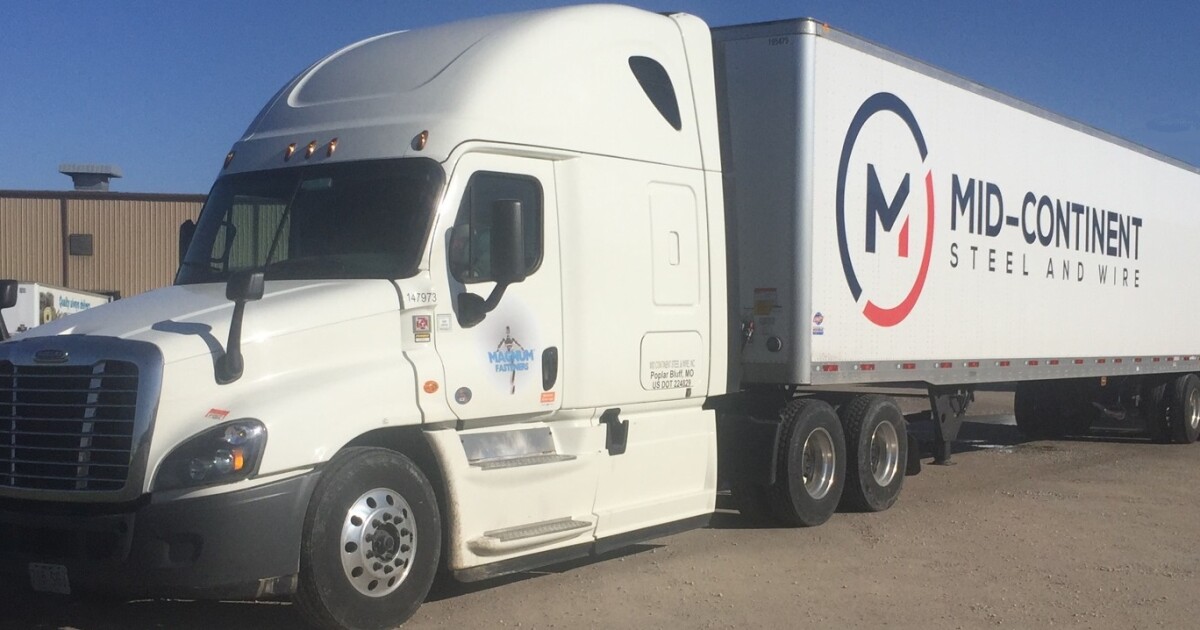
As you know they got their steel from Mexico and the tariff regime hits them hard. So they are caught in a squeeze where their taxes went up, but they can't just pass along their costs to their customers without losing market share and revenues.
Let's personalize it a little bit. A guy has a salary job, no overtime, so his income is fixed. He spends it in the usual ways, some goes to taxes, some to housing, food, kids expenses, savings, maybe a little fun. Suddenly a big repair bill comes along--the windows are all rotting or something. Has to get paid for somehow. Sure in the short run he can borrow from his savings or the bank, but money that goes into the windows isn't there to go into a new gun or the kid's orthodontist. If a company isn't in a position to pass along cost hits to its customers, if it can't just say to them "give me more money for the same amount of product", then it has to redirect money from other uses to cover this cost change. I honestly don't know why this is so hard. Maybe you've never had to juggle a budget? You're career military, so maybe this is why we hear stories of $10,000 toilet seats?Last edited by togor; 02-19-2019, 03:53.Comment


Comment