
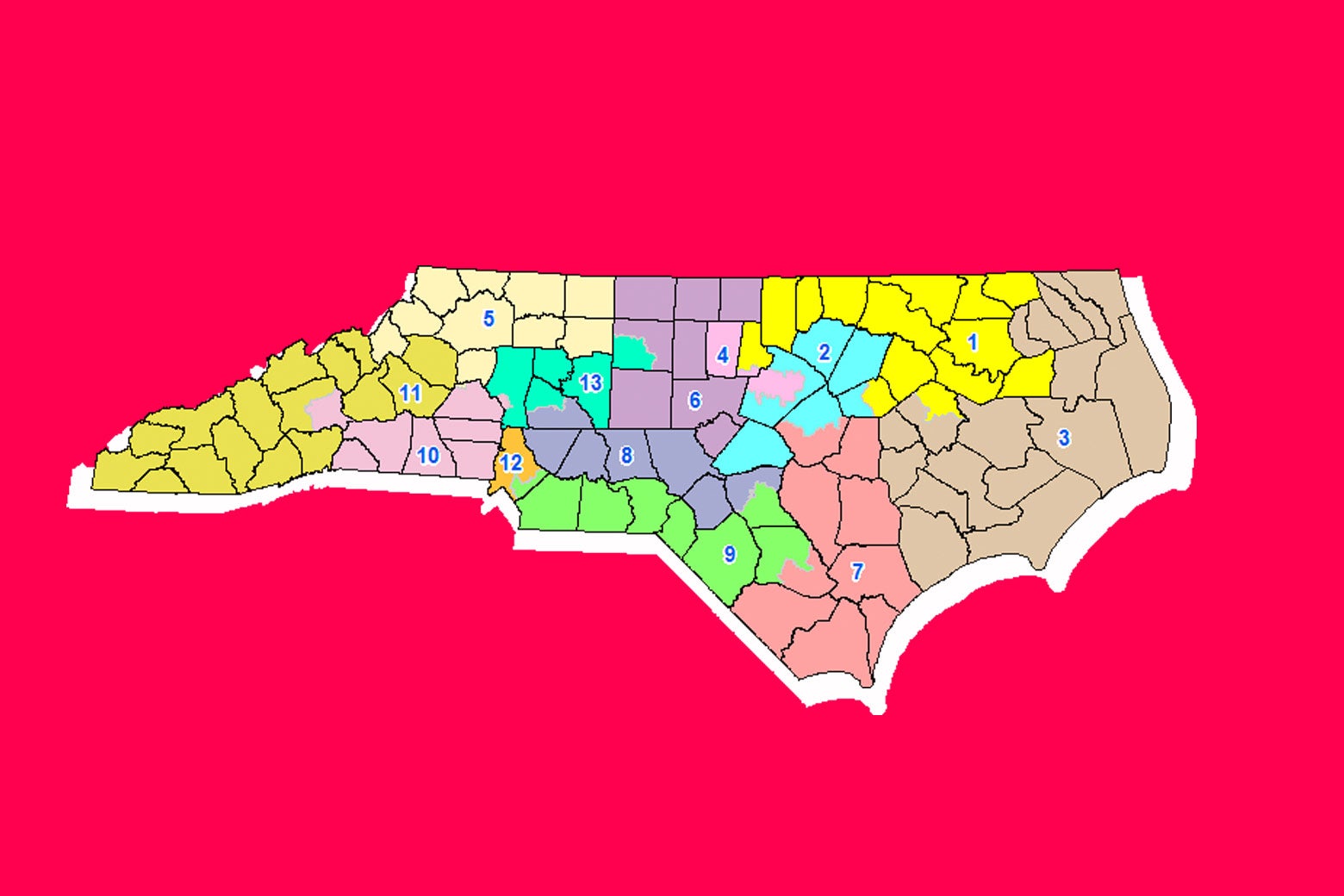
A story from 2012 centered on Tom Hofeller, the GOP expert on drawing partisan maps. Hofeller has since passed, and through a series of unlikely events, copies of his hard drive backups, containing years worth of his work on districting throughout the country, are now legally in the hands of Common Cause, a progressive watchdog group. Both sides have done it, but one side seems more interested than the other in bringing gerrymanders to an end, at least in the most extreme form. I don't like them because they empower the political extremists on both ends at the expense of most Americans.
Redistricting
Collapse
X
-
Redistricting
A story from 2012 centered on Tom Hofeller, the GOP expert on drawing partisan maps. Hofeller has since passed, and through a series of unlikely events, copies of his hard drive backups, containing years worth of his work on districting throughout the country, are now legally in the hands of Common Cause, a progressive watchdog group. Both sides have done it, but one side seems more interested than the other in bringing gerrymanders to an end, at least in the most extreme form. I don't like them because they empower the political extremists on both ends at the expense of most Americans.
Last edited by togor; 06-02-2019, 05:45.Tags: None -
Conversely when you have laws such as the Voting Rights Acts which says the votes of certain groups can't be diluted.....Comment
-
Redistricting is complex -- I know, as an Election Commissioner I had to redistrict our county.
Here's the problem -- everything is based on the "Census Block" Every 10 years, the Census bureau breaks the country into census blocks. How do they do it? My theory is they give a map and Crayola to a drunken chimpanzee. They make no sense -- there are large blocks with nobody in them, small blocks with nobody in them. And there are other blocks with everybody in them.
In redistricting, you CANNOT break up a census block. A block is either in a district or out of it. Since every district has to be within */- 5% of all other districts, it's an exercise of shuffling blocks. In the end, the district is made of whatever blocks that will meet the standard. Now it is true that at a higher level you can play hanky panky -- here in Arkansas the then Democrat majority in the legislature extended my district (the 1st) into the old 4th district by giving it all the counties along the Mississippi River, in an attempt to maintain a Democrat majority in this district. They then ran a corridor from the 4th District into the 2nd District to take in the liberal area around the University of Arkansas. This was known as the "Fayetteville finger."
It didn't work -- we're now 100% Republican.
BUT in "Arkansas vs US Term limits" an attempt to put term limits on Congressmen was struck down by the court, which ruled the state cannot put any obstacles to qualifying for office than the Constitution has.
Say what! The Constitution does NOT say a congressman has to live in his district -- only in the state. It doesn't say he has to be part of a political party, or require petitions to be nominated.
So constitutionally, redistricting should have no impact on who can and cannot run for office.Comment
-
Tell us more, I am curious.Redistricting is complex -- I know, as an Election Commissioner I had to redistrict our county.
Here's the problem -- everything is based on the "Census Block" Every 10 years, the Census bureau breaks the country into census blocks. How do they do it? My theory is they give a map and Crayola to a drunken chimpanzee. They make no sense -- there are large blocks with nobody in them, small blocks with nobody in them. And there are other blocks with everybody in them.
In redistricting, you CANNOT break up a census block. A block is either in a district or out of it. Since every district has to be within */- 5% of all other districts, it's an exercise of shuffling blocks. In the end, the district is made of whatever blocks that will meet the standard. Now it is true that at a higher level you can play hanky panky -- here in Arkansas the then Democrat majority in the legislature extended my district (the 1st) into the old 4th district by giving it all the counties along the Mississippi River, in an attempt to maintain a Democrat majority in this district. They then ran a corridor from the 4th District into the 2nd District to take in the liberal area around the University of Arkansas. This was known as the "Fayetteville finger."
It didn't work -- we're now 100% Republican.
BUT in "Arkansas vs US Term limits" an attempt to put term limits on Congressmen was struck down by the court, which ruled the state cannot put any obstacles to qualifying for office than the Constitution has.
Say what! The Constitution does NOT say a congressman has to live in his district -- only in the state. It doesn't say he has to be part of a political party, or require petitions to be nominated.
So constitutionally, redistricting should have no impact on who can and cannot run for office.
SamComment
-
When they got redistricting on the ballot in Michigan, they were out-right lying that all present district would be effect.
They walked away from me when I said your going to overturn the V.R.A. and the SCOTUS decision that the minority congressional district were required??Comment

Comment