WW1 Cruiser USS Olympia ...

Collapse
X
 
  • Time
  • Show
Clear All
new posts
  • dogtag
    Senior Member
    • Sep 2009
    • 14985

    #1

    WW1 Cruiser USS Olympia ...

    Apart from nostalgia, there's something really special about these old
    marvelous looking big gun warships that the new sleek missile cruisers lack.
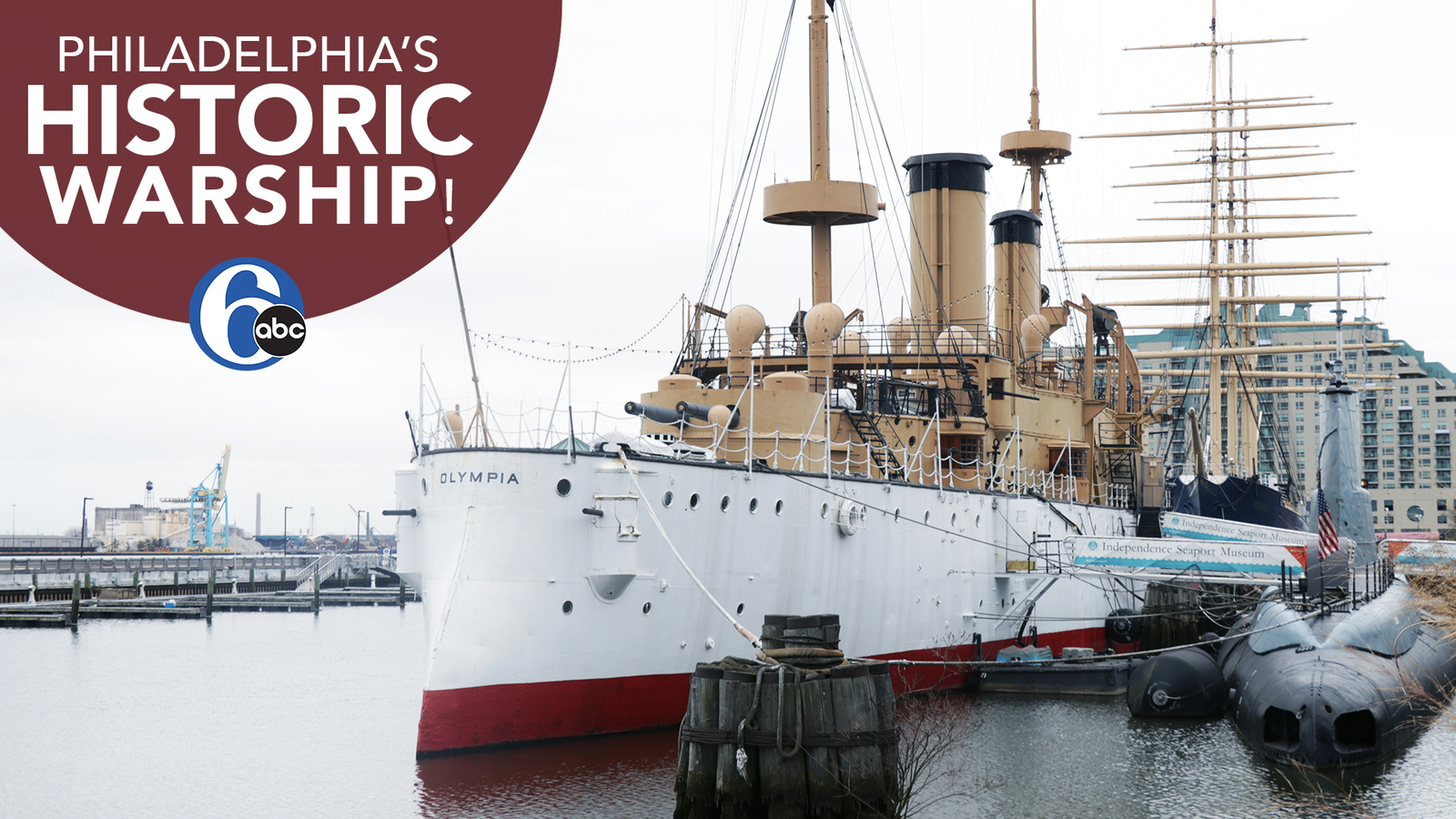
    Cruiser Olympia is the oldest steel warship afloat in the world. Community Journalist Matteo ventures deep within the vessel to celebrate her 125th anniversary.
  • Vern Humphrey
    Administrator - OFC
    • Aug 2009
    • 15875

    #2
    She's quite a ship -- she brought home the Unknown Soldier of WWI.

    Comment

    • sid
      Senior Member
      • Sep 2009
      • 3198

      #3
      I have been on the Olympia several times. I have stood on the spot where Admiral Dewey gave the the order, "You may fire when ready Hadley."

      She is a grand old ship. I think most of her large guns protruding out of the sides are now in working order. There are volunteers who come there every weekend to help restore them. I also remember visiting the surgeon's operating room which is really primitive by modern standards. But hell, that was 175 years ago.

      Comment

      • blackhawknj
        Senior Member
        • Aug 2011
        • 3754

        #4
        The Olympia was commissioned in 1895 and is the sole survivor of the Great White Fleet.

        Comment

        • Vern Humphrey
          Administrator - OFC
          • Aug 2009
          • 15875

          #5
          Originally posted by sid
          I have been on the Olympia several times. I have stood on the spot where Admiral Dewey gave the the order, "You may fire when ready Hadley."
          "'You may fire when you are ready, Gridley".

          Comment

          • Art
            Senior Member, Deceased
            • Dec 2009
            • 9256

            #6
            I'm glad to see that they finally got the money together to try to save the old girl.

            Olympia was an interesting ship built in a time when the U.S. couldn't really compete with European countries in the number of major surface combatants. So they went to a plan that they'd used in the early days of the Republic - Powerful Cruisers. The Olympia was the most powerful armored cruiser in the world when she was commissioned in 1895. Like the heavy frigates the U.S. built in the early 1800s she was more powerful than any cruiser and faster than any battleship. Today she is in her WW I configuration with her original 8"/35cal. guns replaced with 5"/51 cal. weapons which were probably an upgrade. In addition all of her older 5" secondary guns were replaced with 5"51s. While definitely obsolescent by the end of the first decade of the 20th Century she remained a useful auxiliary vessel through WW I. She remained in service until 1922, not a bad run at all.

            It's really too bad the pre dreadnaught battle ship Oregon, another historic veteran of the Spanish American War which had also been preserved as a memorial was scrapped in WW II for her strategic metals.
            Last edited by Art; 02-09-2020, 02:56.

            Comment

            • Roadkingtrax
              Senior Member
              • Feb 2010
              • 7835

              #7
              The officer's quarters on the Olympia is a lesson in functional carpentry.

              "The first gun that was fired at Fort Sumter sounded the death-knell of slavery. They who fired it were the greatest practical abolitionists this nation has produced." ~BG D. Ullman

              Comment

              • Vern Humphrey
                Administrator - OFC
                • Aug 2009
                • 15875

                #8
                Originally posted by Art
                I'm glad to see that they finally got the money together to try to save the old girl.

                Olympia was an interesting ship built in a time when the U.S. couldn't really compete with European countries in the number of major surface combatants. So they went to a plan that they'd used in the early days of the Republic - Powerful Cruisers. The Olympia was the most powerful armored cruiser in the world when she was commissioned in 1895, more powerful than any cruiser and faster than any battleship. Today she is in her WW I configuration with her original 8"/35cal. guns replaced with 5"/51 cal. weapons which were probably an upgrade. In addition all of her older 5" secondary guns were replaced with 5"51s. While definitely obsolescent by the end of the first decade of the 20th Century she remained a useful auxiliary vessel through WW I.

                It's really too bad the pre dreadnaught battle ship Oregon, another historic veteran of the Spanish American War which had also been preserved as a memorial was scrapped in WW II for her strategic metals.
                There is a story about the USS Oregon. She sailed from the Pacific Northwest, down the coasts of North and South America, around the Horn, and then up the east coast of South America to be present for the battle of Santiago Bay. Joshua Slocum, the first man to sail around the world single handed, was crossing the Atlantic at that time -- the British at the Cape of Good Hope had warned him that the Spanish Navy would sweep the seas clean of American ships.

                Off the coast of Brazil, he saw smoke -- a battleship! She altered course and headed for him. He ran up the Stars and Stripes and loaded his Winchester. It turned out to be the USS Oregon, whose captain came out on the bridge wing to "speak" him.

                "Have you seen any Spanish ships?"

                "No. But I propose we remain in company for mutual protection."

                Comment

                • jjrothWA
                  Senior Member
                  • Aug 2009
                  • 1148

                  #9
                  Re: USS Oregon

                  I found a book at a antigue bookstore, titled: McKinleys Bulldog - The USS Oregon.

                  Describes the buidling, the seatrials and the Run around the Horn and the intelligince of the Officers and Crew, in voting to shorten the water rations and allocate the ice making capacity to the "BLACK Gang" member getting ALl of it. and the Engineering Officer who recommended the sequestering of the last two coal bunkers that were filled with the "hard"CARDIFF coal for "battle" and minimizing the seawater usage for the boilers, minimizing scale build-up.
                  On the morning of 3rd July, was on the eatern flank of the USN blockage, when the Spanish made their sortie to destiny. THE OREGON was able to get steam up
                  and was reported to the acting blockaging commander by his loksouts as: OREGON up and steaming. SHE HAS A BONE IN HER TEETH!"
                  She fired the last shot of the battle.

                  Ya, I'm a history buff.

                  Comment

                  • blackhawknj
                    Senior Member
                    • Aug 2011
                    • 3754

                    #10
                    One interesting fact about the Olympia was that it was built as a flagship. Also it was built when naval design was in a real state of flux, in large part because no one really knew what to build-battle line vs. commerce raiders, hence ships were built according to theories, not experience.

                    Comment

                    • Vern Humphrey
                      Administrator - OFC
                      • Aug 2009
                      • 15875

                      #11
                      The experts -- the British Navy -- had not fought a fleet engagement since Trafalgar in 1806. There were admirals who thought the future of Naval warfare was still broadsides at point-blank range, followed by boarding with pikes and cutlasses. The battle of Santiago Bay (1898) would be the first fleet engagement in more than 90 years.

                      Comment

                      • blackhawknj
                        Senior Member
                        • Aug 2011
                        • 3754

                        #12
                        There was the Battle of Lissa on July 20, 1866 where the somewhat smaller and less heavily Austrian fleet under Tegethoff defeated the larger Italian fleet under Persano. The Austrians won through ramming, that convinced many that a steam powered ram would be a decisive weapon.
                        Before Santiago there was Manila Bay, despite the Spanish Fleet being stationary we had a very poor ratio of hits.
                        Last edited by blackhawknj; 02-10-2020, 05:54.

                        Comment

                        Working...