303 gallery load

Collapse
X
 
  • Time
  • Show
Clear All
new posts
  • BCL
    Junior Member
    • Mar 2010
    • 5

    #1

    303 gallery load

    I have a No1 Mk3 ishy and I'm wondering if there is a safe load for 100 gr bullet using pistol powder. Saw someone on youtube using a 100 gr bullet and 13 grains of unique in 303 brass. Is it safe to use a fast pistol powder? What about the total case volume and the light powder charge? I want a light load my kids can shoot easily.
    Thanks
  • bruce
    Senior Member
    • Sep 2009
    • 3759

    #2
    Have not fired any gallery loads in the .303 British. Have fired a wheelbarrow load of .30-06 gallery loads. Loaded plenty of them for my daughters when I was helping them learn to shoot centerfire rifle. In a 03-A3 Remington they did very well. As very useful load for my daughters was a 150-165 gr. cast lead bullet loaded over 8-9 gr. of Unique. It was wonderful. Shot about like a .22 LR. Very easy to load. Virtually no recoil. Very low noise, with proper hearing protection, report upon firing was exceedingly mild. Left the bore mirror bright clean. Not a bit of leading. Using a 100 gr. jacketed bullet in any .30 caliber rifle, probably better use 9-10 gr.

    Another very good load is to use C.E. Harris suggestion ... 13 gr. of Red Dot. This works for any common military type caliber from .308/7.62mm NATO right on up through 7.92x57mm Mauser and even with the .45-70 round. Google his article. It contains numerous excellent suggestions for small game loads, short range practice loads, mid-range target loads and full power hunting loads using a variety of pistol/shotgun powders that give excellent on target results, low to virtually not existent recoil as well as very good economy. HTH. Sincerely. bruce.
    " Unlike most conservatives, libs have no problem exploiting dead children and dancing on their graves."

    Comment

    • Parashooter
      Senior Member
      • Aug 2009
      • 819

      #3
      Old advice, still good -

      Cast Bullet Basics For Military Surplus Rifles
      By C.E. Harris Rev. 9-6-93

      Cast bullet loads usually give a more useful zero at practical
      field ranges with military battle sights than do full power
      loads. Nothing is more frustrating than a military rifle that
      shoots a foot high at a hundred yards with surplus ammo when the
      sight is as low as it will go!

      Do NOT use inert fillers (Dacron or kapok) to take up the excess
      empty space in the case. This was once common practice, but it
      raises chamber pressure and under certain conditions contributes
      to chamber ringing. If a particular load will not work well
      without a filler, the powder is not suitable for those conditions
      of loading.

      Four load classifications from Mattern (1932) cover all uses for
      the cast bullet military rifle. I worked up equivalent charges
      to obtain the desired velocity ranges with modern powders, which
      provide a sound basis for loading cast bullets in any post-1898
      military rifle from 7 mm to 8 mm:

      1. 125-gr., plainbased "small game/gallery"
      900-1000 f.p.s., 5 grains of Bullseye or equivalent.

      2. 150-gr. plainbased "100-yd. target/small game",
      1050-1250 f.p.s., 7 grs. of Bullseye or equivalent.

      3. 150-180-gr. gaschecked "200-yard target"
      1500-1600 f.p.s., 16 grs. of #2400 or equivalent.

      4. 180-200-gr. gaschecked "deer/600-yard target"
      1750-1850 f.p.s., 26 grs. of RL-7 or equivalent.

      None of these loads are maximum when used in full-sized rifle
      cases such as the .30-40 Krag, .303 British, 7.65 Argentine, 7.7
      Jap, 7.62x54R or .30-'06. They can be used as basic load data in
      most modern military rifles of 7 mm or larger, with a standard-
      weight cast bullet for the caliber, such as 140-170 grains in the
      7x57, 150-180 grains in the .30 calibers, and 150-190 grains in
      the 8 mm. For bores smaller than 7 mm, consult published data.

      The "Small Game or Gallery" Load

      The 110-115-gr. bullets intended for the .30 carbine and .32-20
      Winchester, such as the Lyman #311008, #311359 or #311316 are
      not as accurate as heavier ones like the #311291. There isn't a
      readily-available .30 cal. cast small game bullet of the proper
      125-130-gr. weight. LBT makes a 130-gr. flat-nosed, GC bullet
      for the .32 H&R Magnum which is ideal for this purpose. I
      recommend it highly, particularly if you own a .32 revolver!

      The "100-Yard Target and Small Game" Load

      I use Mattern's plainbased "100-yard target load" to use up my
      minor visual defect culls for offhand and rapid-fire 100-yard
      practice. I substitute my usual gaschecked bullets, but without
      the gascheck. I started doing this in 1963 with the Lyman
      #311291. Today I use the Lee .312-155-2R, or the similar tumble-
      lubed design TL.312-160-2R. Most of my rifle shooting is done
      with these two basic designs. . .

      For "gaschecked bullets loaded without the gascheck," for cases
      like the .303 British, 7.62 NATO, 7.62x54R Russian and .30-'06 I
      use 6-7 grains of almost any fast burning pistol powder,
      including, but not limited to Bullseye, W-W231, SR-7625, Green
      Dot, Red Dot, or 700-X. I have also had fine results with 8 to 9
      grains of medium burning rate pistol or shotgun powders, such as
      Unique, PB, Herco, or SR-4756 in any case of .303 British size or
      larger. . .

      The Harris "Subsonic Target" Compromise

      Mattern liked a velocity of around 1250 f.p.s. for his "100-yard
      target" load, because this was common with the lead-bullet .32-40
      target rifles of his era. I have found grouping is best with
      nongascheck bullets in military rifles at lower velocities
      approaching match-grade .22 Long Rifle ammunition. I use my
      "Subsonic Target" load at around 1050-1100 f.p.s. to replace both
      Mattern's "small game" and "100-yard target" loads, though I have
      lumped it with the latter since it really serves the same
      purpose. Its report is only a modest pop, rather than a crack.

      If elongated bullet holes and enlarged groups indicate marginal
      bullet stability, increase the charge a half grain and try again.
      If necessary increasing the charge no more than a full grain from
      the minimum recommended, if needed to get consistent accuracy.
      If this doesn't work, try a bullet which is more blunt and short
      for its weight, because it will be more easily stabilized. If
      this doesn't do the trick, you must change to a gaschecked bullet
      and a heavier load. . .

      Comment

      • bigedp51
        Member
        • Apr 2016
        • 57

        #4
        I like a full case and not worrying if the case is doubled charged and not straining my bi-focals.

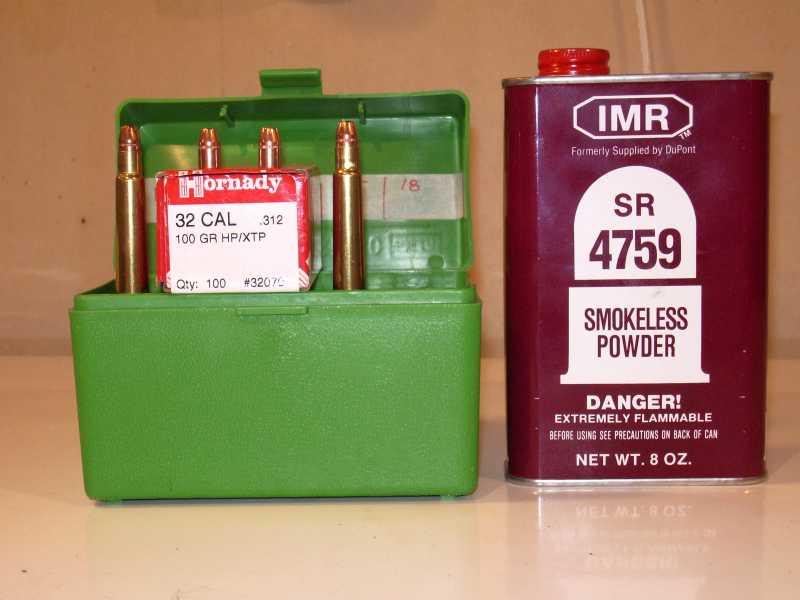
        In the past I used 100 grain pistol bullets and SR 4759 but I believe it was discontinued and now I use Trail Boss. Both of these high bulk powders are great for reduced loads and the cases can not be doubled charged. These light loads will also make the brass butt plate "softer" during extended shooting sessions forming cases.


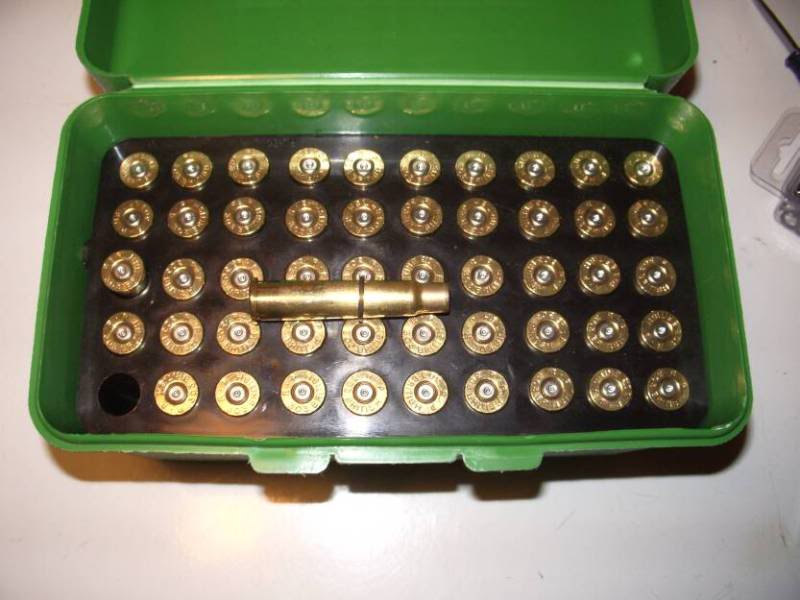
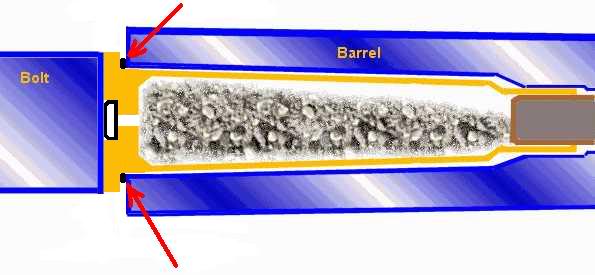
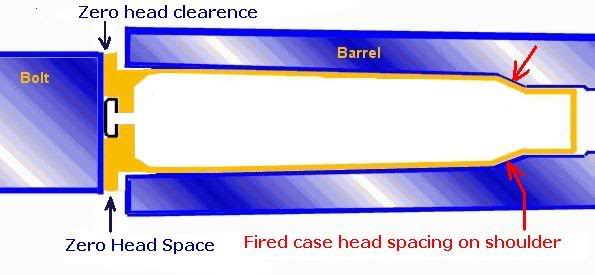
        I use these loads to fire form the cases with a rubber o-ring around the case rim to hold the case against the bolt face. This prevents the case from stretching in the base web area when fire formed. And also centers the rear of the chamber when the o-ring is compressed and not lay in the bottom of the chamber.


        After the case is formed to the chamber the case will headspace on the shoulder and not the rim. And this will prevent case stretching

        Comment

        • BCL
          Junior Member
          • Mar 2010
          • 5

          #5
          Thanks for the info---really helps.

          Comment

          • Darreld Walton
            Senior Member
            • Sep 2009
            • 632

            #6
            Anyone consider 00 buck pressed in the neck with something like Trail Boss?

            Comment

            Working...