-
-
SLA Marshall is not a completely credible source. A lot of wrong conclusions came out of his work. We knew in WWII from the Kasarine Pass forward to cut back on lubrication if dust was present - it's in the manual. It explicitly mentions going to a light instrument lube - or none - in such conditons. The Aleutians campaign was another such "learning experience" in "cold weather operations" - US forces learned a lot the hard way in the first two years of fighting a global war. New weapons, new tactics - a steep learning curve we did master, but not without cost.
Learning "what works" from those who went before you simply makes sense. It amazes me the number of people who buy an M1A (which SAI sends with a copy of the GI M14 Manual) who apparently are unaware of what is already known - different environments you operate in do matter, but can be easily dealt with if you know what you should know about your rifle. If you haven't studied your personal weapon in any depth, shame on you.
What I really object to about SLA Marshall are his conclusions from his sometimes disputable observations - that lead us away from rifle skill and into full auto and the M16 as a substitute. For example, he promoted the idea that we don't need a rifle that can shoot past 300 yards because most guys don't fire their rifles using aimed fire at any but quite short ranges. That's a training problem, not a call for a shorter ranged gun. And he also said most troops don't fire at all. These are Training and morale issues - not hardware issues. My Dad (82nd Airborne, WWII Sgt.) told me WWII Airborne personnel were routinely expected to be able to hit a man out to 500 yards with their M1s - pretty much on demand, the majority of the time. They knew all about windage and elevation and range estimation. If someone taught you the proper care and feeding of a Garand actioned firearm already known in WWII (reduce/change lubes as current environmental conditons dictate) in Boot camp you would not have the reported problems after that date, would you? CCLast edited by Col. Colt; 01-10-2016, 10:00.Colt, Glock and Remington factory trained LE Armorer
LE Trained Firearms InstructorComment
-
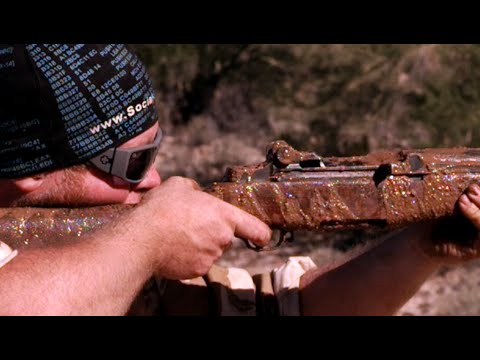
Although this is an M1 test, may as well post it here for anyone who hasn't seen it. The lesson learned is that firearms don't function when filled with dirt rocks or mud. Seal or protect the action and they will work on and off until the dirt eventually filters in.
Comment

 Tweet
Tweet


Comment