
 Tweet
Tweet
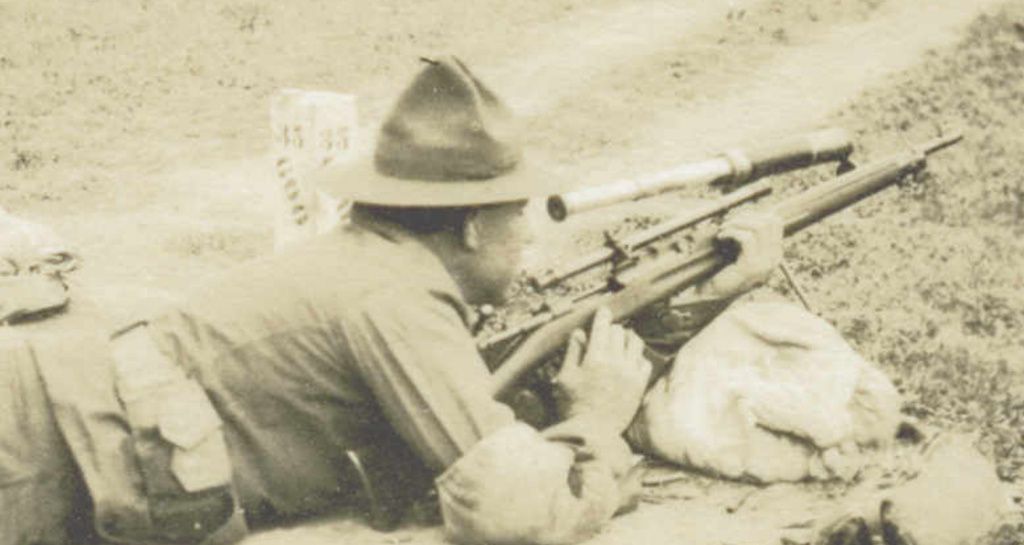
You are looking at yet another 1903 with a WRA modified scope attached, probably one of the WWI WRA sniper rifles. Note the round black dots in the center of the adjustment knobs and the absence of the Grasshopper. That round black dot is actually a blued screw head that holds the knob. This is a postbellum photo, but I don't know the date or location offhand. I have it in my files, and I think it was taken at Sea Girt.
I, too, have noticed the differing lengths of the rear base on the WRA sniper rifles. I suspect it is a result of their manufacturing process. The extra length is excess, but a man like Niedner would want a neat appearance, and would probably make them the same length as the receiver ring. I got nothing, and am just guessing.
As for who built the 500 WRA sniper rifles, you seem to forget the contract with Winchester for the rifles. If Philly built them, why would Winchester get paid for them. Winchester was building all kinds of arms for the War Department. No way in hell would they farm out a 500 rifle contract for modified scopes that they made. All they had to do was modify their existing mounts and tap the receiver and barrel and mount the scope and do some QAT. The Corps Philly Depot did indeed state they could make any part for the 1903. I suspect they were looking for work like everyone else. That is what depots do.
I worked at the MCB Albany Depot in 1970 as a Marine (Albany, Georgia). If all depots operate as Albany did, civilians run the depot and tolerate the Marines by giving them the menial jobs to keep them busy. I cleaned out blown up AMTRAKs that came in on rail cars about once a week. We had to remove all ordnance, ammo, weapons, and body parts from the AMTRAKs before the civvies started working on them. The two most interesting things I found were a 45 and a foot in a boot. An AMTRAK has a huge CO2 fire extinguishing system that is tripped by a switch at the drop door. Every new Jarhead got the treatment. The other Jarheads would let the new guy go into the interior and they would trip that switch. The new guy would come out with frost on his ear lobes and white as a ghost from frost. It was amazing how cold it got in an instant when those bottles went off. I got into the habit of tripping that switch on every AMTRAK I inspected to the detriment of my fellow Jarheads. I also safety wired the bolts that held the observation port windows to the body. I had to make the same number of turns between bolts or those old men (to me at the time) would make me redo the job. They could just look at the finished job and tell if it was right. I can now safety wire a dog's nuts to a cat's tail.
Keep 'em coming, Steve. You definitely have my attention.
jt
I, too, have noticed the differing lengths of the rear base on the WRA sniper rifles. I suspect it is a result of their manufacturing process. The extra length is excess, but a man like Niedner would want a neat appearance, and would probably make them the same length as the receiver ring. I got nothing, and am just guessing.
As for who built the 500 WRA sniper rifles, you seem to forget the contract with Winchester for the rifles. If Philly built them, why would Winchester get paid for them. Winchester was building all kinds of arms for the War Department. No way in hell would they farm out a 500 rifle contract for modified scopes that they made. All they had to do was modify their existing mounts and tap the receiver and barrel and mount the scope and do some QAT. The Corps Philly Depot did indeed state they could make any part for the 1903. I suspect they were looking for work like everyone else. That is what depots do.
I worked at the MCB Albany Depot in 1970 as a Marine (Albany, Georgia). If all depots operate as Albany did, civilians run the depot and tolerate the Marines by giving them the menial jobs to keep them busy. I cleaned out blown up AMTRAKs that came in on rail cars about once a week. We had to remove all ordnance, ammo, weapons, and body parts from the AMTRAKs before the civvies started working on them. The two most interesting things I found were a 45 and a foot in a boot. An AMTRAK has a huge CO2 fire extinguishing system that is tripped by a switch at the drop door. Every new Jarhead got the treatment. The other Jarheads would let the new guy go into the interior and they would trip that switch. The new guy would come out with frost on his ear lobes and white as a ghost from frost. It was amazing how cold it got in an instant when those bottles went off. I got into the habit of tripping that switch on every AMTRAK I inspected to the detriment of my fellow Jarheads. I also safety wired the bolts that held the observation port windows to the body. I had to make the same number of turns between bolts or those old men (to me at the time) would make me redo the job. They could just look at the finished job and tell if it was right. I can now safety wire a dog's nuts to a cat's tail.
Keep 'em coming, Steve. You definitely have my attention.
jt



Comment