WWI Sniper Scope Cases

Collapse
This topic is closed.
X
X
 
  • Time
  • Show
Clear All
new posts
  • Marine A5 Sniper Rifle
    Senior Member
    • Aug 2009
    • 7450

    #46
    Howdy, Ed. I hope you are faring well. Give me a call someday when you aren't busy. I will tell you all about my latest project - a LSR (Land Speed Racer). I am going to run it at Bonneville next year. I hope to have the fastest blown fuel 750 cc flathead Harley in the world. I am having a ball building it. Jim Lieneweber designed the cams for it.

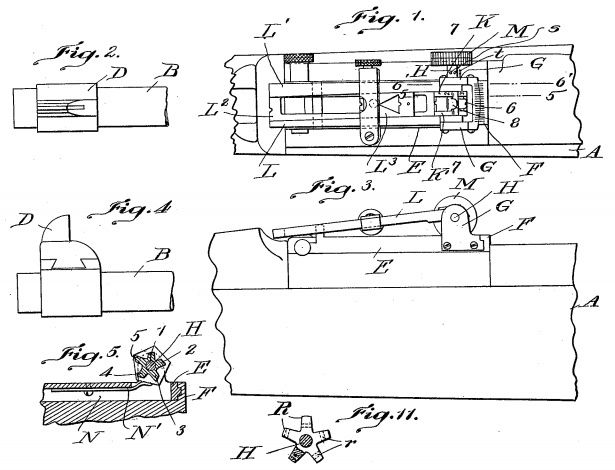
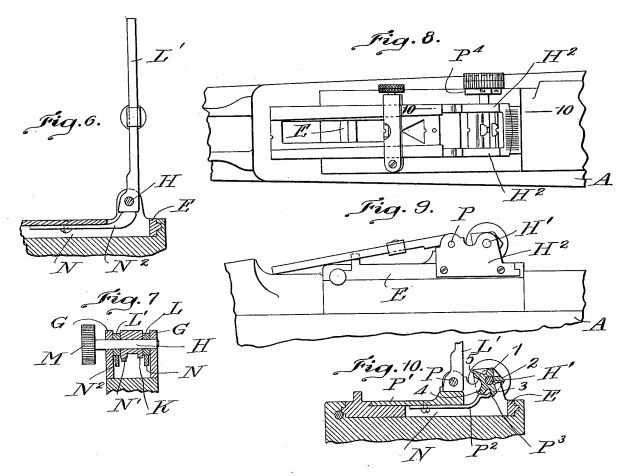
    I really think the real issue in understanding the WWI USMC sniper program is nomenclature and knowing who dreamed up the program and why and how they did it. For example, most documents I have seen refer to the modified mounts and bases simply as #2 mounts, which they are, albeit highly modified. Yet in communication after communication, the modified mounts are simply referred to as #2 mounts. To really understand the USMC sniper program, one needs to understand who was running the sniper program from the Marine side, and why. It was they who asked for the modifications, and they had a good reason for each modification.

    The A5 scopes with modified mounts are fairly common. I have three of them myself, and I know individuals that have more of them than I do. I was privileged to see a scope cabinet built to house nothing but USMC scopes. The cabinet was about 10' long x 5' tall, and had individual drawers for each scope. That person had more A5's than I will ever see again in my lifetime. They sell on eBay and other auctions on a regular basis. They all have Mann-Niedner bases. Have you ever seen one that didn't? They number in the hundreds. The named (sniper) scope cases are more rare, but when found, they are, with one exception to my knowledge, are 8-loop scope cases. They are the 800 lb gorilla in the room. On the other side, not a single A5 scope with modified mounts and 7.2" center common bases (knob on base receptacle attached to scope - the "Marine Springfield" bases supposedly developed by WRA) has ever surfaced, again to my knowledge. The powers that were (PTW) in the Corps wanted a base system that allowed the scope to be removed quickly with a firm bump of the hand, yet be instantly returned to its mount with no lose of accuracy. That is why one sees the open sight elevations in the scope cases. The PTW knew there would be many instances when the open sights would be preferable to a scope. Scope damage was a serious concern in an environment where Marines had their clothing shot to pieces by machine guns and shrapnel (Lt. Cates, later Commandant Cates, was a good example at Bourches). An 800 yd shot was nothing extraordinary for a typical WWI 4th Brigade Marine. Just look at what happened at Les Mare Farm. So the PTW made sure there was an alternative to the scope, and that the open sights could be accessed in an instant. Anyone who has tried to remove an A5 scope with regular mounts after it has been rained on or even gone through morning dew knows just how difficult it can be to turn those screws.

    Don't think for an instant I can't document my claims also. I also have a source of information that is very detailed, and is not available in any archive (thanks to another good friend). This stuff didn't come to me in a dream.

    Take care, Ed. My head hurts too.

    Jim

    Comment

    • Marine A5 Sniper Rifle
      Senior Member
      • Aug 2009
      • 7450

      #47
      [QUOTE=cplnorton;469056]
      ....Now you come back and say you have proof from a document. Well Jim I'm the one who sent this out to everyone back in Febuary,
      Not to me, you didn't.

      ....so I am quite familiar with this one. First it's not NOT a Marine document as you state. It's from the Marine Gazette or Leatherneck Magazine dated Dec 1925, that is talking about the currect activities at the Philadelphia Depot. So it's not the official document you portay it to be. It's a magazine.
      Where did I use the word "official" and when and where did I portray it as "official"? Please don't embellish my statements to fit your preconceived notions, it is unprofessional and unethical at best. The magazine is published by the Corps to keep the Marines informed, and it is indeed a Marine Corps document, is it not? If you say it isn't, you are going to have to convince about a million Marines plus the Corps itself.

      ....And what you haven't figured out in all this Jim, and I said this earlier, is they never stopped putting A5 rifles together.
      What are you talking about? The rifle teams used A5's for decades. Show me any statement I have ever made to the contrary. Are you making this stuff up as you go? Arms and the Man is full of pictures of rifle team Marines holding rifles with A5's. And you say I haven't figured it out yet? Where on earth did you get that idea?

      There is not just one tappered block out there Jim. This is a big clue to all of this. And as I said the Marines called them Tappered blocks. But that isn't what Winchester called them.
      A tapered block is a tapered block. You may change the angle or the height, but it is still a tapered block. Give it any name you want, but it is a Mann-Niedner base.

      If you are going to imply that you have some kind of proof that WRA made a tappered block design, you might want to make the Magazine doesn't say the tappered block design was developed and made at Philadelphia Depot.

      I was refuting your previous statement, which you have now done for me - thanks. That particular magazine issue was published in 1925, not 1917 The Ordnance Section at the Philly Depot was established in 1919, which you know by now; which makes your statements a little suspect. If you are trying to imply that the bases found on the modified A5 scopes is not a Mann-Niedner base, my response is BS! We all know that after the war, the Ordnance Section at Philly Depot made anything needed for a 1903 rifle. I think you are getting a bit confused.

      I tried repeatedly to post that same clip, but Jouster kept telling me it had too many characters (over 800,000). How did you post it?

      The tone of your post is less than desirable. Let's just stick to facts and opinions and leave embellishments out of the exchange and not presume you know what I have, or have not, figured out. I posted a request for pictures of scope cases, and you tell me, and the world, they are all fakes without one whit of documentation to back up your assertion. I told you why I believe them to be the issued scope cases (physical evidence), but you have offered nothing in return.

      I have told you before, and I tell you again - beware of how you interpret documents. By the way, I don't think for one second that the word "developed" in the magazine clip means "invented". I think it means they developed the capability to make Mann-Niedner bases.

      Regards,

      Jim

      Comment

      • cplnorton
        Senior Member
        • Sep 2009
        • 2194

        #48
        Jim I disagree with many of the statements you have made, but it's not worth my time nor my energy to even respond. Your recollection of events and mine are quite different. It's up to the reader to decide.

        As far as your constant need to try to belittle me and give me advice on how to be a better researcher. I think I have already proved I am quite capable to research on my own and if I say something, I have the proof to back it up.

        Have a good life Jim.
        Last edited by cplnorton; 08-27-2016, 02:56.

        Comment

        • Marine A5 Sniper Rifle
          Senior Member
          • Aug 2009
          • 7450

          #49
          Originally posted by cplnorton
          Jim I disagree with many of the statements you have made, but it's not worth my time nor my energy to even respond. Your recollection of events and mine are quite different. It's up to the reader to decide.
          I have no idea what you are talking about. All our communications are written records. Conserve your energy.

          As far as your constant need to try to belittle me and give me advice on how to be a better researcher. I think I have already proved I am quite capable to research on my own and if I say something, I have the proof to back it up.
          I have only encouraged you. Look back at any post or email. If you think advising you to be careful how you interpret documents is belittling you, you have reached a sad state of affairs. You have changed through the months. You started out a cheerful fact finding guy. You have found whatever you have found and have now become paranoid that people are trying to "get your data". I doubt you have any document others have not seen, but if by chance you do - congratulations. It changes nothing I have done or am trying to do. If you fall apart every time someone asks you to document some adverse claim you make (which you still haven't done), you have a hard row to hoe. Back in the day, JB used to take me to task on a fairly frequent basis, and he can do so with the fewest words of any man I have ever met. Just ask RTL. I admire JB a ton, and I realized he was trying to help.

          By the way, pulling documents from archives does NOT make you a researcher per se. You will eventually discover your boxes of documents are like mine - they won't change history. During WWI, there was a huge shortage of materials from tin to leather. They often had to improvise and use what they had to meet deadlines. I don't think WRA was in the leather business, and I suspect they sent what they could find. You may produce a contract for 6-loop scope cases, but they sent 8-loop cases.

          I wish you nothing but luck in your endeavors to find whatever it is you are seeking, but if you make a claim that is contrary to known history, you can expect someone to call your hand.

          Life is good.

          Jim

          Comment

          • Promo
            Senior Member
            • Jun 2011
            • 335

            #50
            It might sound stupid but might be due to the fact that I'm not a native speaker, but what do you understand by "8 loop" and "6 loops" scope case?

            Comment

            • Marine A5 Sniper Rifle
              Senior Member
              • Aug 2009
              • 7450

              #51
              Originally posted by Promo
              It might sound stupid but might be due to the fact that I'm not a native speaker, but what do you understand by "8 loop" and "6 loops" scope case?
              The shoulder strap passes through a number of loops attached to the case. 8-loop has six loops on the lower portion of the case and two on the lid. A 6-loop has four loops on the lower portion of the case and two on the lid. The three scope cases you posted in the first part of this thread are all 8-loops (one appears to be missing its cap loops).

              I would post pictures, but I can't seem to get Jouster to accept my photos or clips. Pics I have previously posted are suddenly "too many characters" and are rejected. Anyone got any idea what I am doing wrong?
              Last edited by Marine A5 Sniper Rifle; 08-27-2016, 02:46.

              Comment

              • clintonhater
                Senior Member
                • Nov 2015
                • 5220

                #52
                Originally posted by cplnorton
                At this time Neidner was a small time gunsmith. He mostly did work for organizations around the Massachusetss area. He worked out of a small garage at his house, so that is why it became necessary to go to the Philly Depot to accomplish a larger work order. ...
                This is the first time since the hack-attack I've been able to access this site, and only by blocking ALL pop-ups. (Right now I'm receiving a notice of a pop-up blocked!)

                Even working in a small garage, he must have owned all the machine tools needed to turn out premium quality barrels and other metal work, because his clientele was the most distinguished group of target shooters in the country at the time--the members of the Walnut Hill Club, many of whom were important inventors and innovators in their own right. For ex., what we now call target scope mounts were developed by a member of the Club named Willard, who never tried to patent them, but authorized his friend, scope-maker John Sidel, to manufacture them; called "Willard rings" at the time, they were soon copied by other makers, and his name forgotten. Most members of this club were more or less well to do gentlemen-sportsmen, so it's surprising that the sum of $1500 was such big money to him.

                Neidner wrote two rather lengthy biographical pieces for the Rifleman in 1950, in which he mainly discusses his famous shooting companions of days gone by; but he doesn't say a word about how he got into the gunsmithing trade. Had he, as a youth, been apprenticed as a machinist, doesn't seem likely he'd ever have worked as a Milwaukee policeman.

                Comment

                • cplnorton
                  Senior Member
                  • Sep 2009
                  • 2194

                  #53
                  Originally posted by clintonhater
                  This is the first time since the hack-attack I've been able to access this site, and only by blocking ALL pop-ups. (Right now I'm receiving a notice of a pop-up blocked!)

                  Even working in a small garage, he must have owned all the machine tools needed to turn out premium quality barrels and other metal work, because his clientele was the most distinguished group of target shooters in the country at the time--the members of the Walnut Hill Club, many of whom were important inventors and innovators in their own right. For ex., what we now call target scope mounts were developed by a member of the Club named Willard, who never tried to patent them, but authorized his friend, scope-maker John Sidel, to manufacture them; called "Willard rings" at the time, they were soon copied by other makers, and his name forgotten. Most members of this club were more or less well to do gentlemen-sportsmen, so it's surprising that the sum of $1500 was such big money to him.

                  Neidner wrote two rather lengthy biographical pieces for the Rifleman in 1950, in which he mainly discusses his famous shooting companions of days gone by; but he doesn't say a word about how he got into the gunsmithing trade. Had he, as a youth, been apprenticed as a machinist, doesn't seem likely he'd ever have worked as a Milwaukee policeman.

                  This is what I have on Neidner. After finishing school he went into the hose buisness with his brothers. Then decided to go west and joined the US Calvalry. But he had always been around guns and ammunition. It says then he went to Milwaukee and became a police officer. This is where he married his polish wife. Around 1907 he came back to Walden, MA and started to work on rifles in a small space behind his house.

                  It details in his little space he had one lathe 9'' swing, one milling machine, and one upright drill, and the usual bench with the small hand tools. He also had electric power and lights.

                  Around 1920 he moved to MI and opened up his gun business there.

                  For the $1500 amount. It says that he had wanted to go back to go on a family trip for a while and didn't have the money and did this to get the money for the trip. That is what it says at least.
                  Last edited by cplnorton; 08-30-2016, 12:15.

                  Comment

                  • 5MadFarmers
                    Senior Member
                    • Nov 2009
                    • 2815

                    #54
                    Originally posted by cplnorton
                    This is what I have on Neidner. After finishing school he went into the hose buisness with his brothers. Then decided to go west and joined the US Calvalry. But he had always been around guns and ammunition. It says then he went to Milwaukee and became a police officer. This is where he married his polish wife. Around 1907 he came back to Walden, MA and started to work on rifles in a small space behind his house.

                    It details in his little space he had one lathe 9'' swing, one milling machine, and one upright drill, and the usual bench with the small hand tools. He also had electric power and lights.

                    Around 1920 he moved to MI and opened up his gun business there.

                    For the $1500 amount. It says that he had wanted to go back to go on a family trip for a while and didn't have the money and did this to get the money for the trip. That is what it says at least.
                    Ok, that got me too curious for my own good.

                    Niedner

                    Yes, that's the same Niedner family in spite of the "immigrated in 1895" claim as they were living together in 1902. Charles H, Charles L, and Adolph (Otto). Don't bother looking for the house as it's now a parking lot for a five story apartment building. House next door did survive - it's a side by side duplex now.

                    Niedner was in Milwaukee in 1888. He worked as a clerk for Roettcher & Schimmel. They were a retailer of carpet, wallpaper, etc., Pretty fair size. Don't bother looking for the store though as the street was renamed and the building dozed some time ago. If it helps it's about five blocks from the Harley-Davidson museum. While there walk North Water street as it's a lot of fun.

                    Married to Josie Malezeska on November 14th, 1887.

                    I suspect he had relatives there as Milwaukee is swimming in Niedners.

                    On January 9th, 1909, Niedner took first place in the Massachusetts Rifle Association off-hand match. Held at Walnut Hill, where-ever that is.

                    Niedner Rifle Corp was founded in the 2nd week of January, 1921, with $30,000 in stock. Niedner, William A. Stolley and C.W. Hendryx being the shareholders.

                    As an aside, in 1912 Niedner patented a rifle sight which appears to be an improvement to the M-1905 on the '03. He assigned his rights away.
                    Last edited by 5MadFarmers; 08-30-2016, 01:52.

                    Comment

                    • clintonhater
                      Senior Member
                      • Nov 2015
                      • 5220

                      #55
                      Originally posted by cplnorton
                      This is where he married his polish wife...
                      Photo of her in the Rifleman piece--he evidently liked them large.

                      Comment

                      • PhillipM
                        Very Senior Member - OFC
                        • Aug 2009
                        • 5937

                        #56
                        As an aside, in 1912 Niedner patented a rifle sight which appears to be an improvement to the M-1905 on the '03. He assigned his rights away.
                        Is there a picture of it somewhere?
                        Phillip McGregor (OFC)
                        "I am neither a fire arms nor a ballistics expert, but I was a combat infantry officer in the Great War, and I absolutely know that the bullet from an infantry rifle has to be able to shoot through things." General Douglas MacArthur

                        Comment

                        • cplnorton
                          Senior Member
                          • Sep 2009
                          • 2194

                          #57
                          Originally posted by PhillipM
                          Is there a picture of it somewhere?
                          Here is the rear sight Phillip. He also had a patent for a shell holder, but that is the only two patents I've ever been able to associate with him.


                          Comment

                          • PhillipM
                            Very Senior Member - OFC
                            • Aug 2009
                            • 5937

                            #58
                            Thanks, Steve!
                            Phillip McGregor (OFC)
                            "I am neither a fire arms nor a ballistics expert, but I was a combat infantry officer in the Great War, and I absolutely know that the bullet from an infantry rifle has to be able to shoot through things." General Douglas MacArthur

                            Comment

                            • Promo
                              Senior Member
                              • Jun 2011
                              • 335

                              #59
                              Forgotten Weapons made a video on three M1903 "snipers" in the upcoming James D. Julia auctions. Who wants to see it himself, visit https://www.youtube.com/watch?v=-dWICTS0g-E

                              What was interesting to me (aside the funny screw heads on all scope bases) was the leather scope can one rifle comes with. I captured a few screenshots, which fit into the discussion here - see attachment.

                              If I'm reading the serial of #645.991 correctly (please correct if someone has a different suggestion), it's not SRS listed, but right within a block of USMC rifles, and right next to a handful of SRS listed snipers in the 646.xxx serial range.
                              Attached Files

                              Comment

                              • cplnorton
                                Senior Member
                                • Sep 2009
                                • 2194

                                #60
                                Yeah to me that rifle looks faked. Those blocks and screws look like repos.

                                On M.H. Van Camp. There is one match. Melvin H. Van Camp

                                -June 5th, 1917 Enlisted

                                -Till July 5th, 1918 He looks like he was just stationed at Marine Barracks Naval Yard New York

                                -July 5th 1918 He joined the Headquarters Overseas Depot Quantico VA

                                -August 26th, 1918 He is transferred to Co. M 3rd BN 13th Regiment


                                I don't show him being a CPL, but there were a lot of Temporary ranks back then so you would have to pull his whole file to see. But how he wrote on the bottom of the case Co. M 13th Regiment, it would have had to been after Aug 26th 1918 that he would have wrote that.

                                This is what I have around it. A lot of Marine rifles inter-twined. Both Telescopic equipped rifles and regular service rifles. Which this really matches what the docs say on how they were selected as well.


                                645755 013031USMC - HAITI 2nd Marines
                                645963 050141USMC - SAN DIEGO 2nd Marines
                                645991 A5 Case named to Melvin H. Van Camp Joined 13th Marines Aug 26, 1918
                                646008 042731USMC
                                646034 071731USMC
                                646035 013031USMC - HAITI 2nd Marines
                                646068SGS 071530USMC - NICARAGUA 5th Marines Telescopic rifle
                                646136SGS 071530USMC - NICARAGUA 5th Marines Telescopic rifle
                                646147 Boot Camp Rifle Leo L. Abbott USMC June 1917
                                646237SGS 031026USMC - PHILA DEPOT (SURVEYED) Telescopic rifle
                                646241SGS 071530USMC - NICARAGUA 5th Marines Telescopic rifle
                                646385 101331USMC
                                646389 102837USMCR - NEW ORLEANS (SURVEY)
                                646475SGS 031026USMC - PHILA DEPOT (SURVEYED) Telescopic rifle
                                Last edited by cplnorton; 09-12-2016, 05:00.

                                Comment

                                Working...