
 Tweet
Tweet
Howdy, Ed. I hope you are faring well. Give me a call someday when you aren't busy. I will tell you all about my latest project - a LSR (Land Speed Racer). I am going to run it at Bonneville next year. I hope to have the fastest blown fuel 750 cc flathead Harley in the world. I am having a ball building it. Jim Lieneweber designed the cams for it.
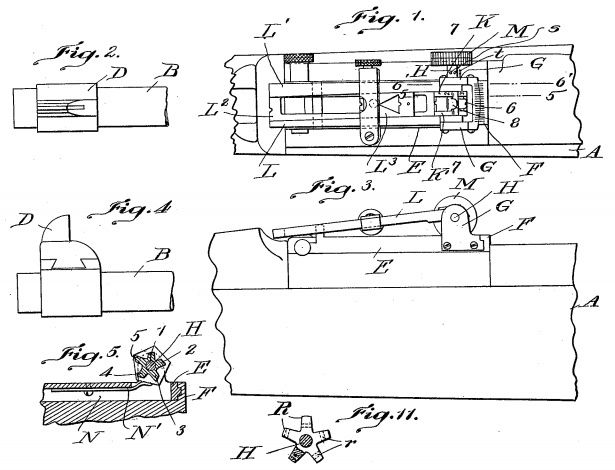
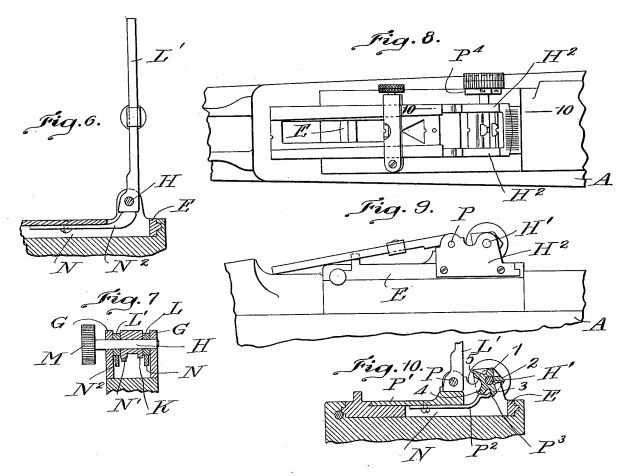
I really think the real issue in understanding the WWI USMC sniper program is nomenclature and knowing who dreamed up the program and why and how they did it. For example, most documents I have seen refer to the modified mounts and bases simply as #2 mounts, which they are, albeit highly modified. Yet in communication after communication, the modified mounts are simply referred to as #2 mounts. To really understand the USMC sniper program, one needs to understand who was running the sniper program from the Marine side, and why. It was they who asked for the modifications, and they had a good reason for each modification.
The A5 scopes with modified mounts are fairly common. I have three of them myself, and I know individuals that have more of them than I do. I was privileged to see a scope cabinet built to house nothing but USMC scopes. The cabinet was about 10' long x 5' tall, and had individual drawers for each scope. That person had more A5's than I will ever see again in my lifetime. They sell on eBay and other auctions on a regular basis. They all have Mann-Niedner bases. Have you ever seen one that didn't? They number in the hundreds. The named (sniper) scope cases are more rare, but when found, they are, with one exception to my knowledge, are 8-loop scope cases. They are the 800 lb gorilla in the room. On the other side, not a single A5 scope with modified mounts and 7.2" center common bases (knob on base receptacle attached to scope - the "Marine Springfield" bases supposedly developed by WRA) has ever surfaced, again to my knowledge. The powers that were (PTW) in the Corps wanted a base system that allowed the scope to be removed quickly with a firm bump of the hand, yet be instantly returned to its mount with no lose of accuracy. That is why one sees the open sight elevations in the scope cases. The PTW knew there would be many instances when the open sights would be preferable to a scope. Scope damage was a serious concern in an environment where Marines had their clothing shot to pieces by machine guns and shrapnel (Lt. Cates, later Commandant Cates, was a good example at Bourches). An 800 yd shot was nothing extraordinary for a typical WWI 4th Brigade Marine. Just look at what happened at Les Mare Farm. So the PTW made sure there was an alternative to the scope, and that the open sights could be accessed in an instant. Anyone who has tried to remove an A5 scope with regular mounts after it has been rained on or even gone through morning dew knows just how difficult it can be to turn those screws.
Don't think for an instant I can't document my claims also. I also have a source of information that is very detailed, and is not available in any archive (thanks to another good friend). This stuff didn't come to me in a dream.
Take care, Ed. My head hurts too.
Jim
I really think the real issue in understanding the WWI USMC sniper program is nomenclature and knowing who dreamed up the program and why and how they did it. For example, most documents I have seen refer to the modified mounts and bases simply as #2 mounts, which they are, albeit highly modified. Yet in communication after communication, the modified mounts are simply referred to as #2 mounts. To really understand the USMC sniper program, one needs to understand who was running the sniper program from the Marine side, and why. It was they who asked for the modifications, and they had a good reason for each modification.
The A5 scopes with modified mounts are fairly common. I have three of them myself, and I know individuals that have more of them than I do. I was privileged to see a scope cabinet built to house nothing but USMC scopes. The cabinet was about 10' long x 5' tall, and had individual drawers for each scope. That person had more A5's than I will ever see again in my lifetime. They sell on eBay and other auctions on a regular basis. They all have Mann-Niedner bases. Have you ever seen one that didn't? They number in the hundreds. The named (sniper) scope cases are more rare, but when found, they are, with one exception to my knowledge, are 8-loop scope cases. They are the 800 lb gorilla in the room. On the other side, not a single A5 scope with modified mounts and 7.2" center common bases (knob on base receptacle attached to scope - the "Marine Springfield" bases supposedly developed by WRA) has ever surfaced, again to my knowledge. The powers that were (PTW) in the Corps wanted a base system that allowed the scope to be removed quickly with a firm bump of the hand, yet be instantly returned to its mount with no lose of accuracy. That is why one sees the open sight elevations in the scope cases. The PTW knew there would be many instances when the open sights would be preferable to a scope. Scope damage was a serious concern in an environment where Marines had their clothing shot to pieces by machine guns and shrapnel (Lt. Cates, later Commandant Cates, was a good example at Bourches). An 800 yd shot was nothing extraordinary for a typical WWI 4th Brigade Marine. Just look at what happened at Les Mare Farm. So the PTW made sure there was an alternative to the scope, and that the open sights could be accessed in an instant. Anyone who has tried to remove an A5 scope with regular mounts after it has been rained on or even gone through morning dew knows just how difficult it can be to turn those screws.
Don't think for an instant I can't document my claims also. I also have a source of information that is very detailed, and is not available in any archive (thanks to another good friend). This stuff didn't come to me in a dream.
Take care, Ed. My head hurts too.
Jim



Comment